 Mechanisms
Materials
When Materials Misbehave
Substances that bounce, flow, shatter or remember, depending on how politely you ask.
Liquid, solid, or both?
Stir cornflour into water until it feels like thick cream. Drag a spoon through it slowly and it parts like syrup. Now slap the surface. Most people expect a splash. Make your own prediction before you try: splash, ripple, or something else?
What happens when you slap a bowl of cornflour and water?
It barely splashes. Your hand meets something that feels briefly solid. The material's behaviour depends on how fast you deform it, which is the theme of this whole page: many "strange" materials are simply answering a question about speed, temperature or stress that we didn't realise we were asking.
Shear thickening
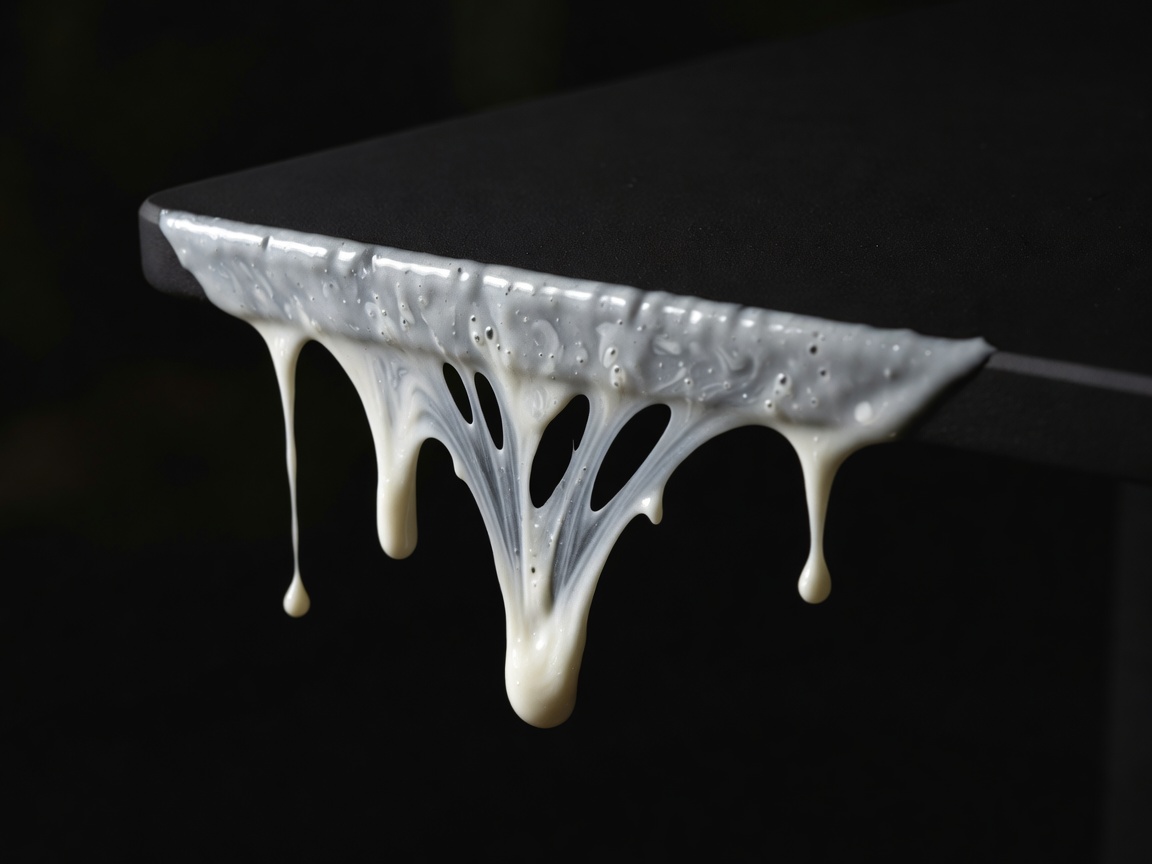
Oobleck
The nickname comes from Dr. Seuss's 1949 book Bartholomew and the Oobleck, about a sticky green substance falling from the sky. The kitchen version, roughly two parts cornflour to one part water, is a dense suspension of starch grains.
At rest, water lubricates the grains and they slide past each other. Under sudden force, the grains are pressed together faster than water can flow into the gaps; they jam into a temporary network that resists. Release the stress and it relaxes back into a liquid. Engineers study similar shear-thickening fluids for flexible protective equipment.
Residual stress
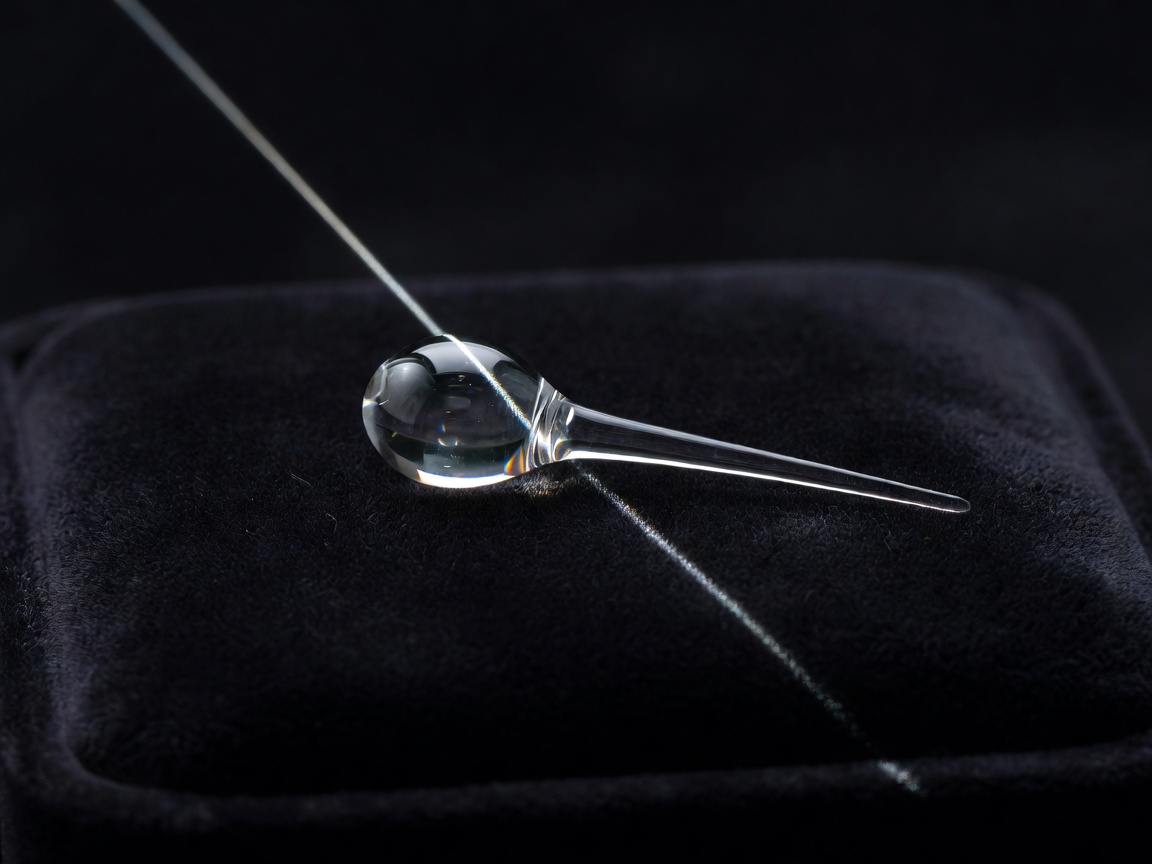
Rupert's drops
Drip molten glass into cold water and you get a tadpole-shaped drop. The bulbous head can survive a hammer blow, yet a gentle snap of the tail turns the whole drop to powder. Prince Rupert of the Rhine brought them to the attention of King Charles II, and the newly formed Royal Society examined them in 1661; Robert Hooke discussed them in Micrographia in 1665.
The outside cools and hardens first. As the molten core cools later, it shrinks and pulls the skin inward, leaving the surface in strong compression and the core in tension. Compression closes cracks, so the head is tough. Break the tail and the stored energy releases as a crack front racing through the drop. Toughened glass in car side windows uses the same principle.
Rupert's drops involve molten glass and flying fragments. Watch them in museum demonstrations or videos; don't make them at home.
Shape memory
Nitinol
In 1959 William J. Buehler at the US Naval Ordnance Laboratory began working with an alloy of nickel and titanium; its shape-memory behaviour was reported in the early 1960s. The name stands for Nickel Titanium Naval Ordnance Laboratory.
At lower temperatures the alloy's crystal structure can rearrange easily, so the wire bends. Warm it past its transition temperature and the crystals snap back into a more ordered arrangement, carrying the wire's shape with them. Some grades are "superelastic" at body temperature, which is why the alloy turns up in flexible spectacle frames and medical stents.
Viscoelastic & thermal
Bouncing putty and oven glass
Silly Putty emerged in 1943 when James Wright, working at General Electric, was looking for a synthetic rubber substitute. Later marketed by Peter Hodgson, it bounces like rubber when thrown, yet slowly flows into a puddle if left alone. Long silicone chains have time to slide past each other over minutes, but not over the milliseconds of a bounce.
Borosilicate glass, developed by Otto Schott in Germany in the 1890s and sold by Corning as Pyrex from 1915, expands very little when heated. Less expansion means less internal stress when one part is hot and another cold, so it resists cracking. A fair footnote: much modern kitchen glassware labelled Pyrex in some countries is tempered soda-lime glass, which handles thermal shock differently.
| Material | Surprise | Underlying cause |
|---|---|---|
| Oobleck | Hardens when hit | Particle jamming under fast shear |
| Rupert's drop | Tough head, fragile tail | Locked-in surface compression |
| Nitinol | Returns to shape when warmed | Temperature-driven crystal change |
| Silly Putty | Bounces, then flows | Polymer chains need time to slide |
| Borosilicate glass | Shrugs off heat shock | Low thermal expansion |
| PTFE (non-stick) | Almost nothing sticks | Fluorine sheath, very low surface energy |
The last row belongs to Roy Plunkett, who discovered PTFE at DuPont in 1938 when a cylinder of gas apparently came out empty. It hadn't; the gas had polymerised into a slippery white solid inside.
Keep looking
Mechanisms Inventions